Power Banks Compared: Pocket Backup or Laptop Companion?
Compare portable battery sizes, usable energy, input and output power, and the practical tradeoffs of charging phones and laptops away from outlets.
This guide draws on published documentation and practical use cases, not hands-on testing. It contains no paid product placements or affiliate shopping links. How we work · Affiliate Disclosure
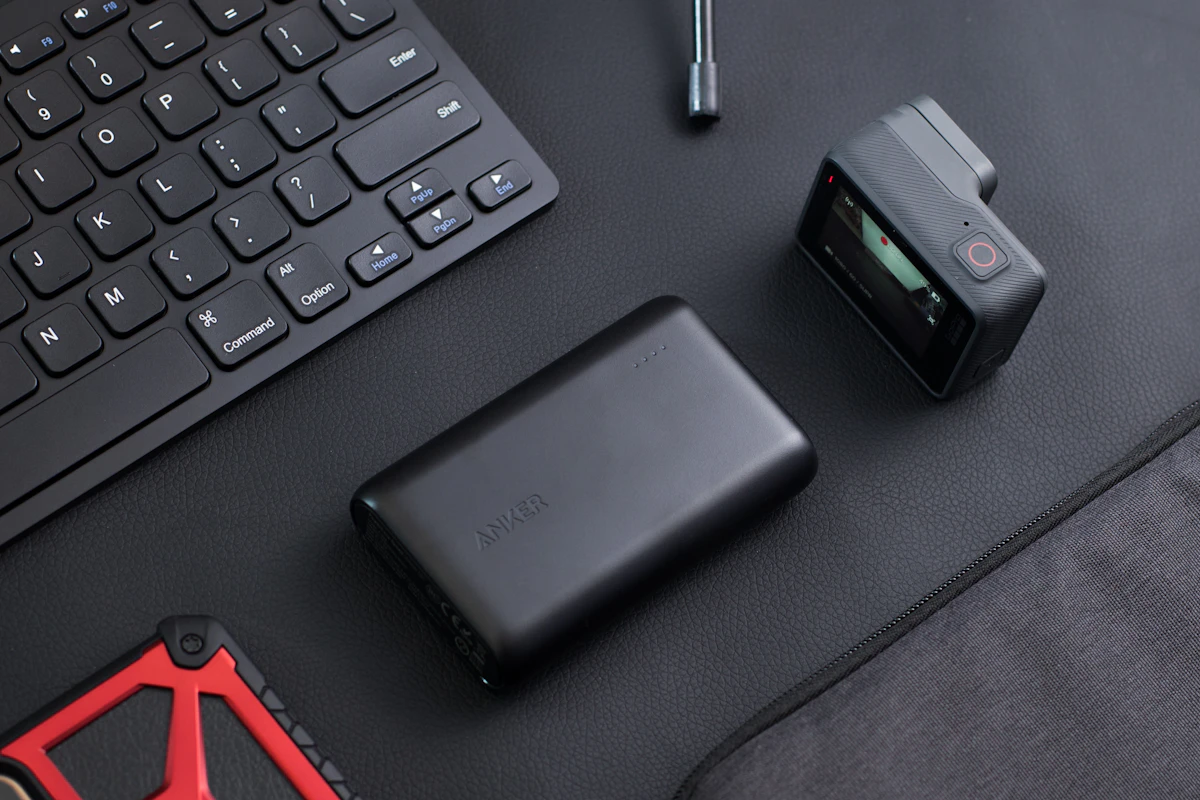
Choose enough usable energy and compatible output for your actual devices, then check whether the size is something you will willingly carry.
In this guide
A portable battery is useful only when it is with you. The largest one may look reassuring on a specification sheet, then spend every weekday at home because it makes a small bag uncomfortable. The opposite mistake is carrying a tiny phone backup and discovering that it cannot meaningfully support a laptop during a long afternoon.
Our preference is to separate emergency phone charging from planned work away from an outlet. The first rewards portability. The second requires a deliberate check of energy, output, and recharge time. Neither use case is adequately described by a single milliamp-hour number.
Capacity and charging power answer different questions
Capacity describes stored charge at a stated voltage; output power describes how quickly compatible devices can receive energy. A power bank can have plenty of capacity but insufficient output for your laptop. Another can deliver high power briefly while holding less total energy than you expected.
Watt-hours provide a useful energy comparison because voltage is included. The calculation is watt-hours equals amp-hours multiplied by nominal voltage. For an illustrative battery rated at 10,000 milliamp-hours and 3.7 volts, that is 37 watt-hours of nominal stored energy. It is not a promise that 37 watt-hours will reach another device.
Conversion and circuit losses reduce usable output, and the receiving device also uses energy while operating. Manufacturer capacity figures and a phone’s battery figure therefore cannot simply be divided to guarantee an exact number of recharges. Prefer a documented rated output capacity or energy figure where available, and treat recharge-count claims as conditional.
Choose by the problem you need to solve
| Your routine | Most useful characteristics | Main tradeoff |
|---|---|---|
| Evening commute with a low phone | Compact size, compatible phone output, easy cable access | Limited reserve for repeated recharges |
| Day trip with heavy navigation use | More capacity and a practical carrying shape | More weight in a pocket or bag |
| Laptop work away from sockets | Suitable USB PD output and adequate watt-hours | Larger size and greater cost |
| Sharing power between devices | Clear simultaneous-output specification | Connecting a second device may reduce laptop power |
These are scenario recommendations, not measured rankings. Laptop compatibility should be checked against the laptop’s own charging requirements.
Read input specifications as carefully as output
A bank that supplies high power may still recharge slowly if its input capability is lower or your wall charger is unsuitable. This matters when you return to a hotel late and leave early the next morning.
Check the supported input, the required cable, and whether the quoted recharge time assumes a particular charger. A short top-up window can make fast input more useful than extra capacity. Our USB-C charger comparison explains how to match a wall adapter without relying on its headline wattage alone.
Pass-through charging is another feature to verify rather than assume. Some banks can charge a device while replenishing their own battery; the behavior, power split, and restrictions differ. Do not treat this feature as proof of uninterrupted backup power for a computer or networking device.
Physical design affects whether you use it
A built-in cable saves one packing step but becomes a critical wear point. A separate cable is replaceable and easier to adapt to different distances. A battery with a built-in plug can be convenient in a small bag, although a rigid attachment may be awkward when using the phone or fitting a thick case.
Consider where the bank will sit while connected. A compact slab may fit a jacket pocket better than a rounded shape with the same nominal capacity. For a laptop, enough cable length to keep the bank off a crowded table can be helpful, provided the cable supports the required power.
Wireless output removes a cable but adds alignment and compatibility considerations. If maximizing usable energy is your main concern, a wired arrangement is the simpler baseline. See our wireless charging comparison before assuming magnetic attachment guarantees the desired charging performance.
Who should skip a larger bank?
If you reliably finish the day with charge remaining, start by carrying your existing charger. A substantial laptop bank may be unnecessary when your destinations offer outlets. Keep a smaller working bank if it covers the occasional gap you actually encounter.
For air travel, check the airline and applicable aviation rules shortly before departure. The FAA’s guidance treats power banks as spare lithium batteries requiring carry-on carriage; capacity and approval conditions also apply. Other airlines or jurisdictions can impose additional restrictions. Do not choose a bank on a generic “airline approved” slogan.
Frequently asked questions
Will a large phone power bank charge my laptop?
Not necessarily. Capacity does not establish the required USB PD output or voltage support. Check both devices’ specifications.
Does a percentage display measure remaining energy precisely?
Treat it as an estimate. It is useful for planning, but it does not guarantee a particular remaining runtime or number of recharges.
Can I use any USB-C cable?
Use one rated for the required charging power and in good condition. Connector shape alone is insufficient.
Sources and scope
Checked October 21, 2026: Anker’s explanation of nominal and rated capacity and FAA PackSafe lithium-battery guidance. No runtime or efficiency measurements are represented as GearPlain testing.
Keep exploring

Car USB Chargers: Build a Charging Setup That Fits the Journey
Compare built-in vehicle ports, socket chargers, and passenger charging layouts by power, infotainment compatibility, cable routing, and everyday convenience.
Read the guide
Magnetic Power Banks: When the Snap-On Convenience Is Worth It
Assess magnetic power banks by phone and case compatibility, physical fit, usable energy, wired options, and the realities of carrying a thicker phone.
Read the guide
Multi-Device Charging Stations: One Stand or Separate Chargers?
Compare combined phone, watch, and earbud charging stations with separate chargers, including compatibility, daily schedules, portability, and replacement flexibility.
Read the guide