Open-Ear vs. In-Ear Earbuds: Awareness or Isolation?
Compare open-ear and sealed in-ear earbuds for home listening, commuting, shared spaces, glasses, calls, and the tradeoff between awareness and isolation.
This guide draws on published documentation and practical use cases, not hands-on testing. It contains no paid product placements or affiliate shopping links. How we work · Affiliate Disclosure
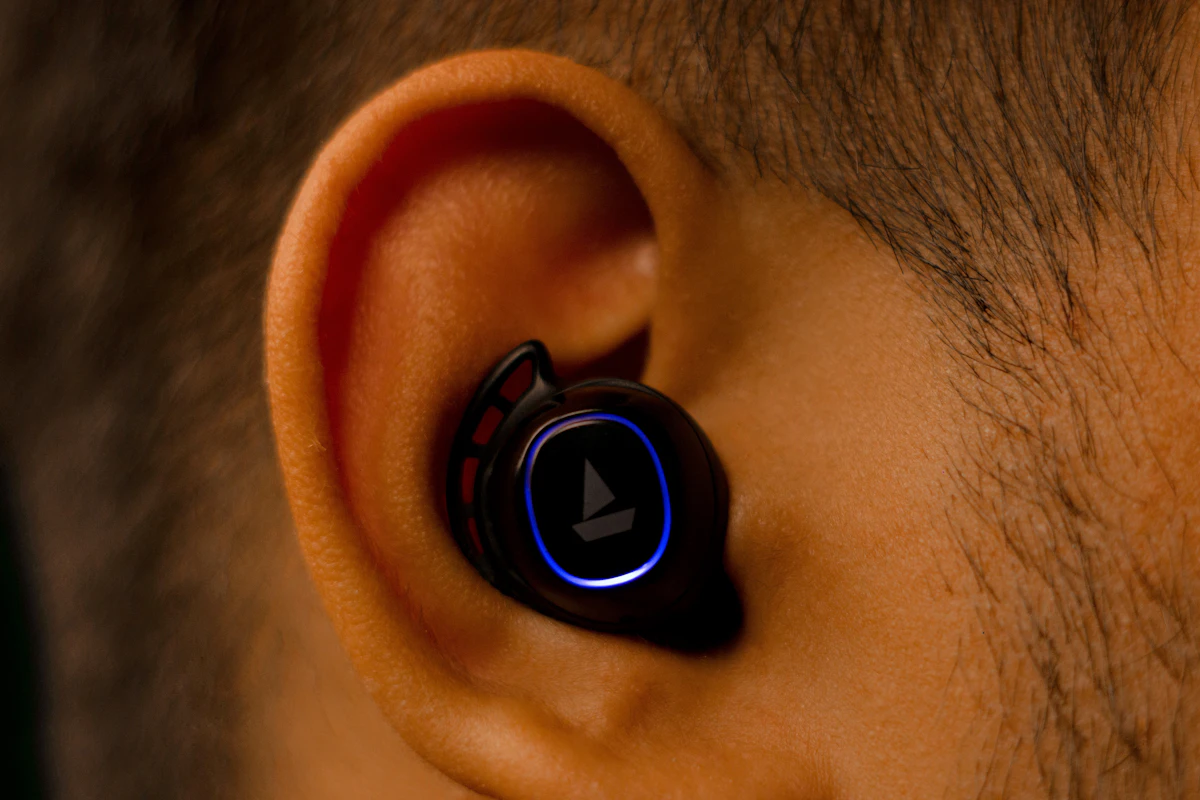
Open-ear designs suit listening alongside your surroundings; sealed in-ear designs suit stronger separation from them. Neither approach is ideal everywhere.
In this guide
You are making lunch while listening to a podcast and want to hear someone speak from the next room. Later, on a noisy train, you want the same dialogue to remain clear. Those two situations ask for opposite things: easy access to surrounding sound at home and stronger separation from it while traveling.
Our assessment is that open-ear designs make the most sense when remaining connected to the room is the priority. Sealed in-ear designs are the stronger starting point when isolation matters. Choosing one means accepting a tradeoff; a marketing promise of all-day versatility does not remove it.
What “open” actually describes
Open-ear headphones leave the ear canal unsealed. Many use small speakers positioned near the ear; others use bone-conduction designs. These approaches should not be treated as identical simply because both leave the canal open. Fit, sound delivery, and the way they sit on the head differ.
Sealed in-ear earbuds use tips to create an acoustic seal. That can provide passive isolation, with active noise cancellation available on some models. An in-ear product’s ambient or transparency mode uses its own electronic system to let outside sound through; it is not the same physical arrangement as leaving the ear canal open.
Neither category guarantees comfort. An open-ear clip can press on the outer ear, a hook can compete with glasses, and an in-ear tip can feel unsuitable despite several size options. Evaluate the points of contact rather than assuming “open” means you will forget it is there.
Compare the listening situations
| Situation | More suitable starting point | Why the other may disappoint |
|---|---|---|
| Podcasts while doing quiet tasks at home | Open-ear | Sealed tips may feel unnecessarily isolating |
| Noisy public transport | Sealed in-ear with appropriate isolation | Open designs must compete with surrounding sound |
| Very quiet shared room | A low-leakage design verified in context | Open-ear sound may be audible to nearby people |
| Frequent conversations between short listening sessions | Open-ear or easy-to-control ambient mode | Repeated removal can become inconvenient |
| Wearing glasses for long periods | Whichever contact shape fits comfortably | Ear hooks and frames may occupy the same space |
These recommendations concern practical fit, not measured audio performance. Specific models can behave differently within either category.
Awareness has limits
Leaving the ear canal open allows more surrounding sound to reach it naturally. That can be useful around the house or when coworkers need your attention. It does not guarantee that you will notice every voice, warning, or vehicle. Audio content, volume, attention, and the environment still matter.
Do not treat open-ear headphones as safety equipment or as permission to ignore local rules and the activity around you. If an activity requires full attention, the useful decision may be to pause playback or remove the headphones entirely.
Sound leakage and noisy places
Because open-ear designs deliver sound without a sealed canal, leakage is a factor to consider, especially in a quiet room. Manufacturers use different acoustic techniques to control it, so avoid assuming all open designs leak equally. Volume, fit, and distance from another person affect the situation.
A noisy environment presents the opposite challenge. External sound remains part of the experience, which can obscure quiet dialogue or musical detail. Turning up playback is not a complete substitute for isolation. If your main use is a loud commute, choose the format around that environment rather than around a quiet-room demonstration.
Sealed in-ear designs also depend on fit. Apple’s guidance explains why a suitable ear-tip seal matters to sound and noise cancellation. A poor seal can make an otherwise promising design less useful, so tip size and placement deserve attention before judging the category.
Controls, calls, and movement
Consider what happens when your hands are occupied. Physical buttons may be easy to locate, while touch controls can behave differently with gloves or accidental contact. Check which actions are available directly on the device and which require a phone application.
For calls, assess microphone performance separately from the openness of the design. Clear incoming sound does not establish clear outgoing speech, especially around wind or conversation.
Try to understand the fit during ordinary movement: looking down, turning your head, and speaking. A shape that sits securely while still may shift during those actions. Stated water resistance and care instructions are also model-specific; an open design is not automatically suitable for sweat or rain.
Who should skip open-ear earbuds?
Skip them as your only listening device if strong isolation is your main requirement. They may also be a poor fit when people sit very close to you in a quiet environment and leakage is a concern.
Conversely, skip sealed in-ear earbuds if the sensation consistently bothers you and your main listening happens in quieter places. Over-ear headphones offer another option, with different pressure and portability tradeoffs. Keep an existing pair if it already handles your routine comfortably.
Frequently asked questions
Are all open-ear headphones bone-conduction models?
No. Many use speakers positioned outside the ear canal. Check the stated acoustic approach and wearing style.
Does transparency mode make in-ear earbuds open-ear?
No. It changes the audio processing while the tips remain physically in place. The experience depends on the implementation.
Will open-ear earbuds disturb other people?
They can, depending on the design, volume, distance, and room. Do not assume either complete privacy or universal leakage.
Sources and scope
Checked October 21, 2026: Bose’s explanation of open-ear and in-ear formats, Bose’s overview of air and bone conduction, and Apple’s ear-tip guidance. The article is a research-based comparison without claimed listening or leakage measurements.
Keep exploring
Bluetooth Audio Adapters: Get the Direction Right
Understand transmitters, receivers, audio inputs, microphone support and pairing before adding Bluetooth to older audio equipment.
Read the guide
Computer Speakers vs Soundbars: Audio That Fits Your Desk
Compare separate desktop speakers and compact soundbars by placement, connections, controls and the way you actually use your desk.
Read the guide
Earbuds vs. Over-Ear Headphones: Choose for the Hours You Actually Listen
Compare earbuds and over-ear headphones for commuting, desk calls, travel, comfort, portability, and the fit details that change everyday listening.
Read the guide